Social Media Automation for Small Business: What to Automate (and What Not To)

Karl Geoffrey
May 28, 2026
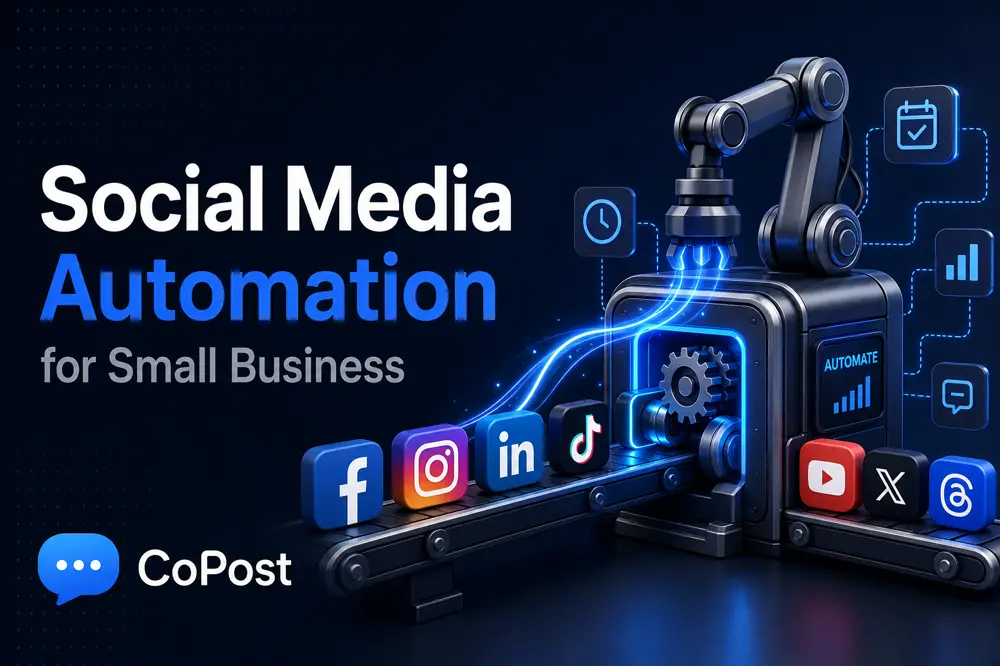
Social media automation is a superpower for small businesses — when used correctly. It can free up hours of your week, keep your posting consistent, and let you focus on the parts of your business that actually need a human touch.
But automation done poorly can make your brand feel robotic, tone-deaf, or spammy. The key is knowing what to automate and what to keep personal.
What you should automate
1. Post scheduling
This is the most obvious one, and there's really no reason to be posting manually in 2026. Schedule your content in advance using a tool like CoPost, and let it publish automatically at optimal times.
2. Content repurposing
If you're creating blog posts, podcast episodes, or YouTube videos, you can automate the process of turning those into social media posts. CoPost's Auto Feed feature connects to your RSS feed, Shopify store, or YouTube channel and generates posts automatically.
3. Evergreen content recycling
Your best-performing content shouldn't be posted once and forgotten. Set up evergreen recycling to automatically reshare top posts on a schedule. CoPost's AI can rewrite the content each time so it stays fresh and doesn't trigger duplicate content flags.
4. First-comment hashtags
Adding hashtags as a first comment keeps your captions clean. Most scheduling tools (including CoPost) let you automate this.
5. Basic inbox sorting
Use automation to categorise incoming messages — flagging urgent ones, auto-replying to common questions, and filtering spam.
What you should NOT automate
1. Replies to comments and DMs
Automated replies feel impersonal and can damage trust. Use templates if you need speed, but always personalise.
2. Trending topic posts
Jumping on trends requires context and timing that automation can't provide. These need a human eye.
3. Crisis responses
If something goes wrong, the last thing you want is an automated post going out as if nothing happened.
The bottom line
Automate the repetitive tasks that don't need a human touch. Keep the personal interactions personal. The time you save on scheduling and repurposing can be reinvested in genuine engagement — which is what actually grows your audience.